
“Never be afraid to raise your voice for honesty and truth and compassion against injustice and lying and greed. If people all over the world…would do this, it would change the earth.” The words of William Faulkner have, on the face of it, never been more relevant in the age of social media, whereby unparalleled access to information and the lived experiences of others have entered realm of expected media intake.
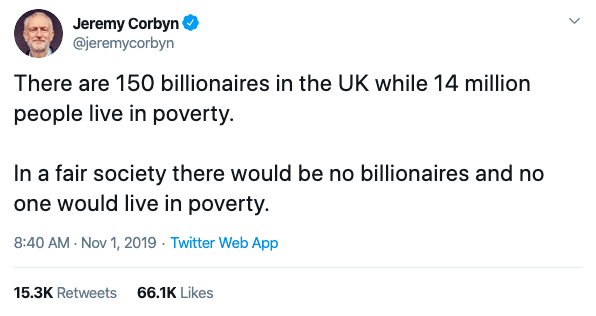
With this in mind, it is therefore not unusual to expect a growth in political engagement and protest movements against the injustice of the everyday person. In a time where the world’s 26 richest people own as much as poorest 50%, it can surely be said without question that there is a clear and obvious disparity between those with a lot and those with little. In other words, “Even if they didn’t pay tax or spend a penny of their earnings, it would take an average UK worker more than 40,000 years to become a billionaire”. Couple this with poor action in response to regionally specific issues, such as “crippling austerity and the lowest real wages growth” in the UK, and the ever looming presence of the global climate crisis, dissatisfaction can be seen as rightly justified.
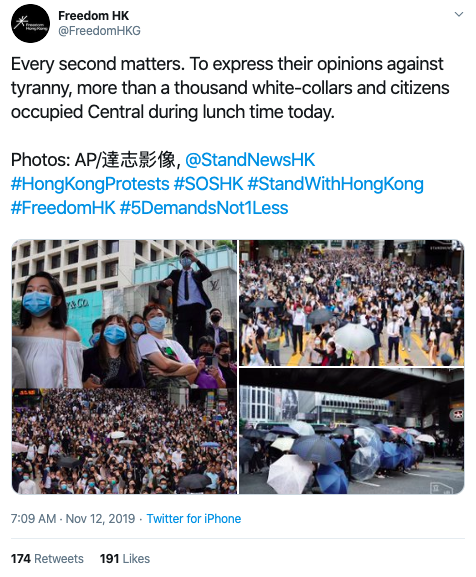
These counter movements can be seen everywhere, from protests against the rife inequality in Chile sparked from metro fares, to Hong Kong’s umbrella movement initially sparked against Anti-Extradition Law Amendment Bill. In Catalonia, France, Lebanon, and Ecuador, tensions and activity are observed, and this remains true closer to home in the UK, with the everlasting fiasco that is Brexit continuing to frustrate and bubble away. Extinction Rebellion’s climate activism is also another broader force across the west, and within these movements both broad and particular, a commonality emerges in the form of the use of social media in achieving collective response and communal assembly.
The role of social media in regard to the assembly, movement, safety and motivation of those involved is quite apparent, with the likes of live updates, maps and widely shared information implemented to great effect. However, it may be fair to say that despite the insurmountable number of protests raging across the globe, direct resolution and implementation of positive change in response to demand has looked few and far between.
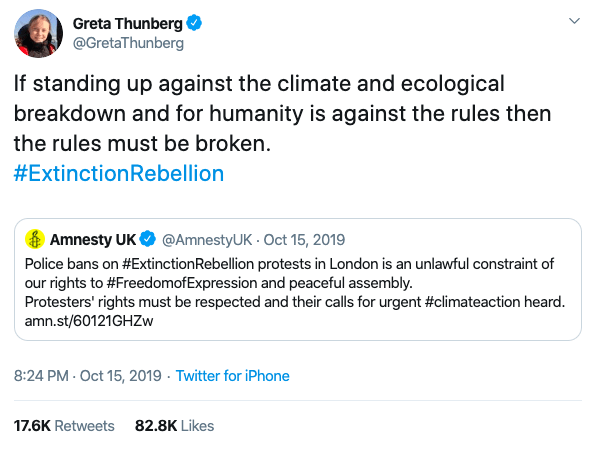
As these movements ebb and flow, we have also laid witness to noteworthy reaction and response from the general public and, perhaps more notably, the state and big business. In Hong Kong, the removal on HKMap.live by Apple in response to criticism from China is but one example of China’s involvement in the suppression of activity it deems unsavoury, In London, the implementation of Section 14 order, granting powers to halt protests across the city, was later deemed unlawful and overwhelmingly seen as draconian. In the words of Jules Carey, partner at Bindmans and part of the team that brought the judicial review claim, “This … is a timely reminder to those in authority facing a climate of dissent: the right to protest is a longstanding fundamental right in a democratic society that should be guarded and not prohibited by overzealous policing.” The protests in Catalonia have also erupted after the Spanish supreme court jailed nine pro-independence leaders.
It is clear to see, therefore, that ruling bodies and businesses take these movements seriously. However, it remains to be seen to what degree, and how these forms of protests will change and manifest over time.
 Declan Short